
Intelligent Textile SORTing to enable CIRCularity
Developing automated sorting systems for post-consumer textiles that cut costs, improve efficiency, and create high-quality feedstock for reuse and recycling.
The mission
Developing automated sorting systems for post-consumer textiles that cut costs, improve efficiency, and create high-quality feedstock for reuse and recycling.


Objective 1: Smart, automated textile sorting
Combine novel technologies like AI and computer vision into a streamlined process to automate sorting for reuse and recycling.


Objective 2: Increased traceability for textiles
Increase traceability of pre-owned clothes through secure, integrated digital solutions such as tokenised RFID tags and Digital Product Passports.


Objective 3: Readiness for recycling
Surpass the current limits of automated textile sorting and deliver high-quality feedstock that meets the technical and economic requirements of mechanical and chemical textile recycling.


Objective 4. Proven impact and viability
Assess technical, environmental, and economic feasibility of automated textile sorting at scale.
News & Events


SORT4CIRC joins Circular Textile Cluster
NEWS
June 18, 2026
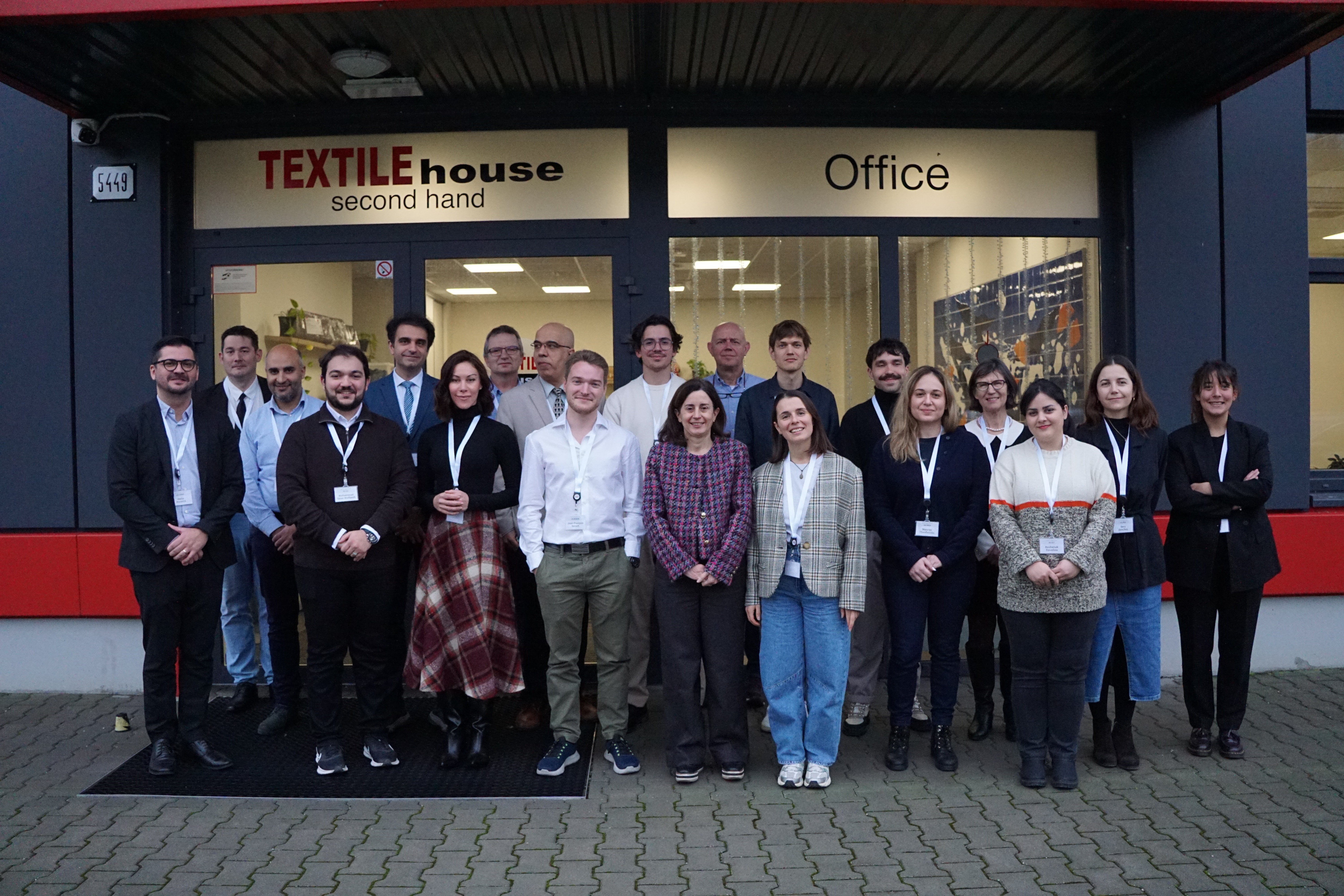
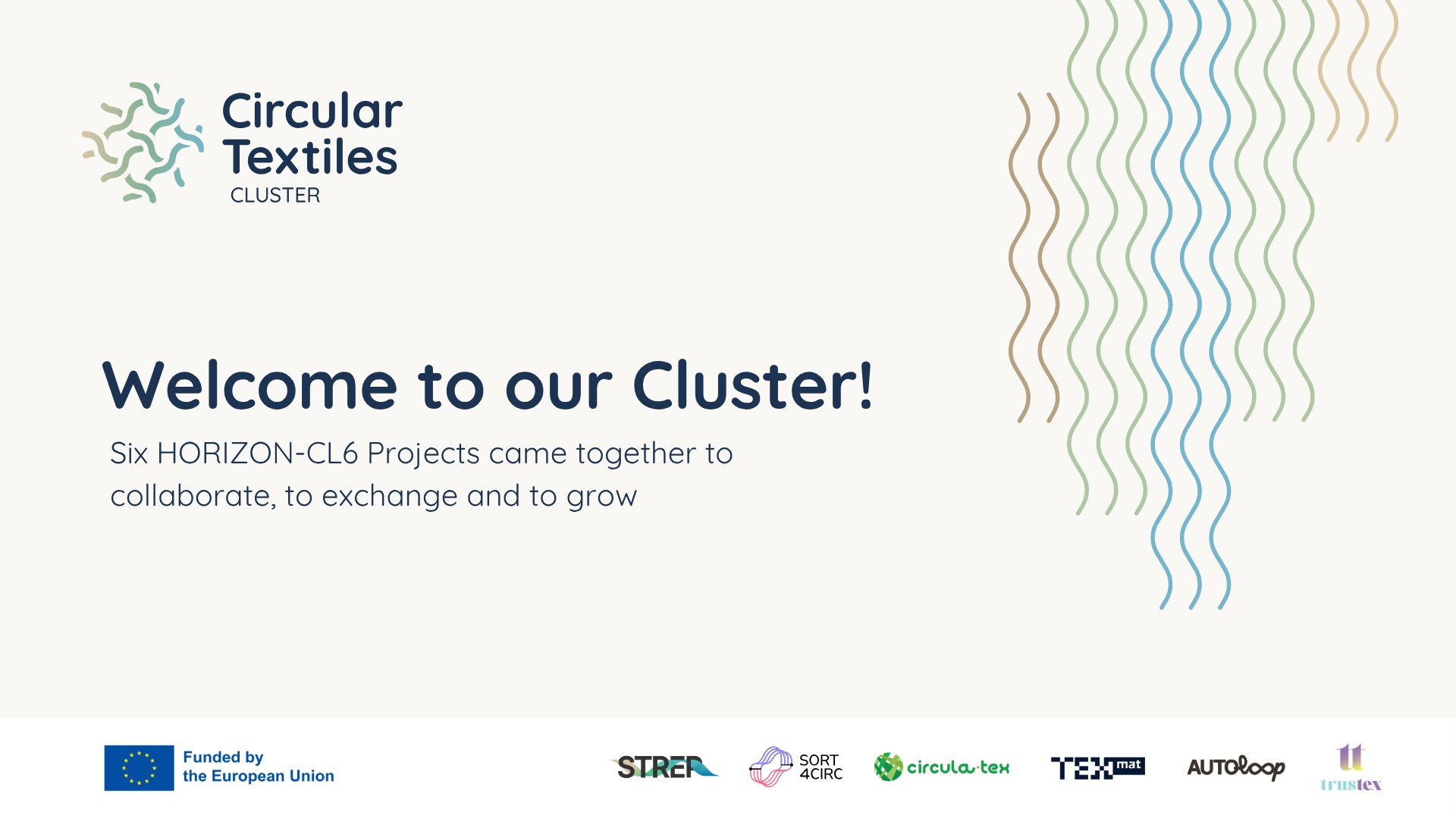
We are proud to announce our participation in the newly formed Circular Textiles Cluster, which includes six projects funded under the EU’s HorizonEurope (HORIZON-CL6) programme. Together, we are joining forces to drive the European textile and clothing industry toward a fully circular and sustainable future.
Apart from SORT4CIRC, the cluster includes the following projects.
STREP: Advancing sustainable chemical recycling and intelligent automation to produce 100% closed-loop recycled yarns exclusively from post-consumer textiles.
AUTOLOOP: Revolutionizing the industry with AI-powered sorting, pollutant-resistant chemical recycling, and a Digital Product Passport (DPP) Data Hub.
Circula-TEX: Guiding the sustainable, harmonized implementation of Extended Producer Responsibility (EPR) schemes across Europe.
TRUSTEX: Analyzing the feasibility of EPR schemes to promote circular business models through eco-design, improved waste management, and digital traceability.
TexMat: Piloting smart, automated collection containers that reward consumers for returning textiles while gathering product history via DPPs.
Stay tuned for future webinars, collaborative newsletters, and innovative industry insights.
SORT4CIRC showcased at Go Circular Summit, Mannheim
NEWS
April 9, 2026
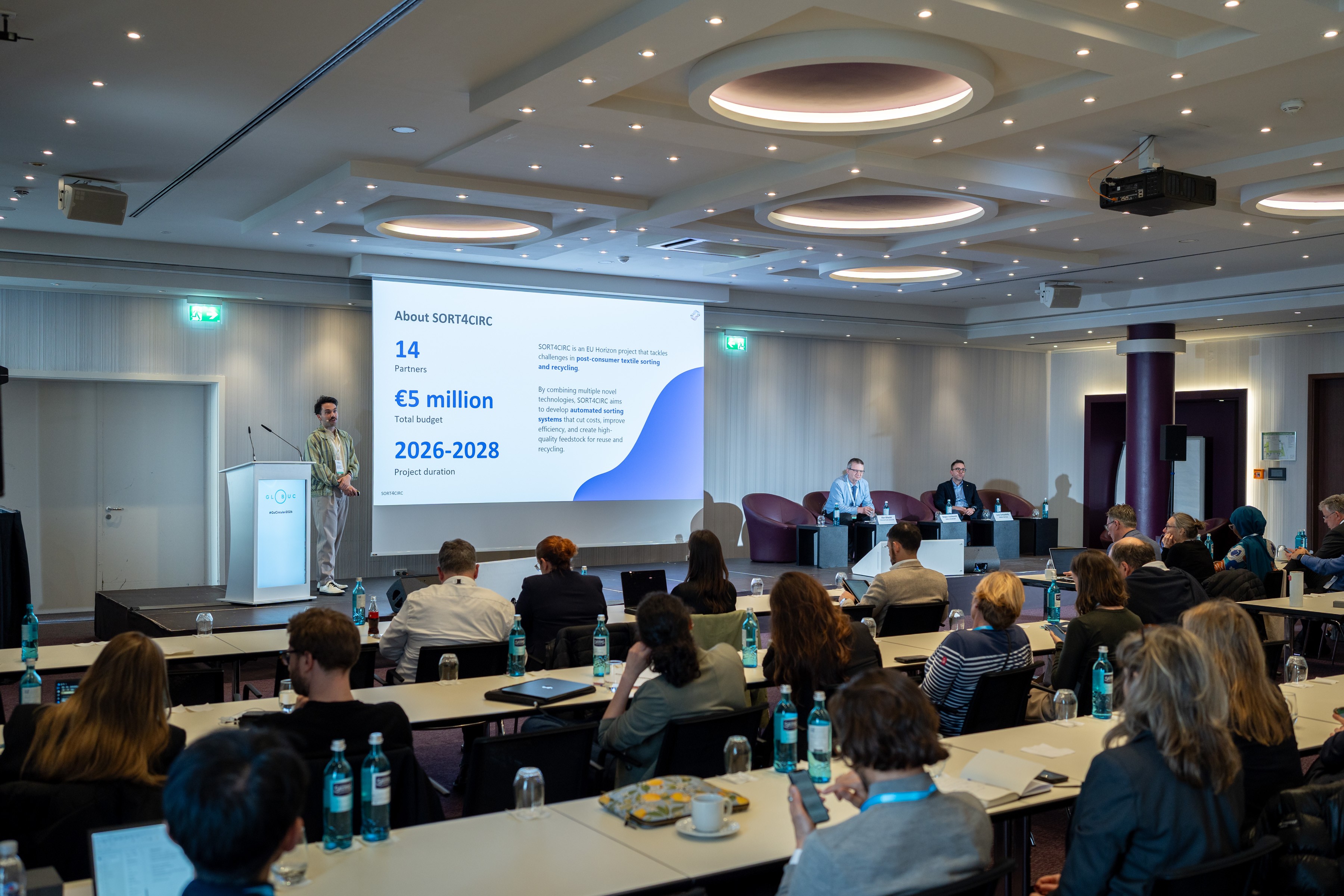
SORT4CIRC was presented publicly for the first time at the inaugural “Textiles Day” of the Go Circular Summit in Mannheim, Germany, marking an important milestone as the project moves into full delivery phase.
The project was introduced during the afternoon session “Data & Next-Generation Recycling Technologies: Enabling Circular Textiles at Scale”, chaired by Alan Wheeler, Chief Executive Officer of the Textile Recycling Association (TRA) and a SORT4CIRC project partner.
The session brought together leading voices on digitalisation and recycling innovation, with Stepan Vashkevich, Circular Textiles Strategist at Circle Economy—also a SORT4CIRC partner—presenting the project to an audience of around 200 professionals from across the European and global textiles value chain.
Stepan’s presentation set out the wider context of textile circularity, drawing on system-level analysis of material flows and market dynamics. It highlighted the structural challenges facing the sector: despite increasing volumes of post-consumer textiles, much of the material is currently downcycled or lost to disposal, while sorting processes remain largely manual, costly and inefficient.
At the same time, forthcoming policy measures—including separate collection obligations, Extended Producer Responsibility (EPR), and Digital Product Passports—are expected to significantly increase volumes and place additional pressure on existing systems.
Against this backdrop, SORT4CIRC was presented as a practical, solutions-driven response. Bringing together 14 partners across Europe, the project is developing automated sorting systems that combine AI, computer vision and spectroscopy, alongside enhanced traceability through technologies such as RFID and Digital Product Passports. The aim is to improve efficiency, reduce costs, and generate high-quality feedstock suitable for both reuse and recycling markets.
A key focus of the project is real-world application, with plans to integrate and demonstrate these technologies within an operational environment, supported by robust technical, environmental and economic assessment to establish a viable business case for scale.
“What SORT4CIRC is doing is bridging the gap between ambition and implementation. By combining advanced sorting technologies with traceability, we are creating the conditions needed to make textile recycling both scalable and economically viable,” said Vashkevich.
Earlier in the day, Alan Wheeler also participated in a panel discussion titled “The Coming Storm – How Regulation is Reshaping Textile Recycling”. The session explored how the EU’s evolving regulatory framework is shaping the future of the sector and provided an opportunity to highlight the role of SORT4CIRC in addressing emerging challenges, as well as to introduce the project ahead of its dedicated presentation later in the programme.
“There is a clear recognition across the sector that regulation alone will not deliver circularity. Projects like SORT4CIRC are essential in developing the practical solutions that will enable the industry to respond at scale,” said Wheeler.
The Go Circular Summit brought together a wide range of stakeholders, including industry leaders, policymakers and technology providers, with SORT4CIRC partners including the Textile Recycling Association and Circle Economy, also supporting the event.
The strong level of engagement in Mannheim underlined the importance of collaborative, technology-led initiatives such as SORT4CIRC in delivering a more efficient and commercially viable circular textiles system.
SORT4CIRC aims to improve sorting with new technologies
Blog
April 9, 2026
This article was first published in the Textiles Loop Magazine
SORT4CIRC is a new multi-partner project with EU funding which focuses on the challenges of textile sorting as part of recycling operations.
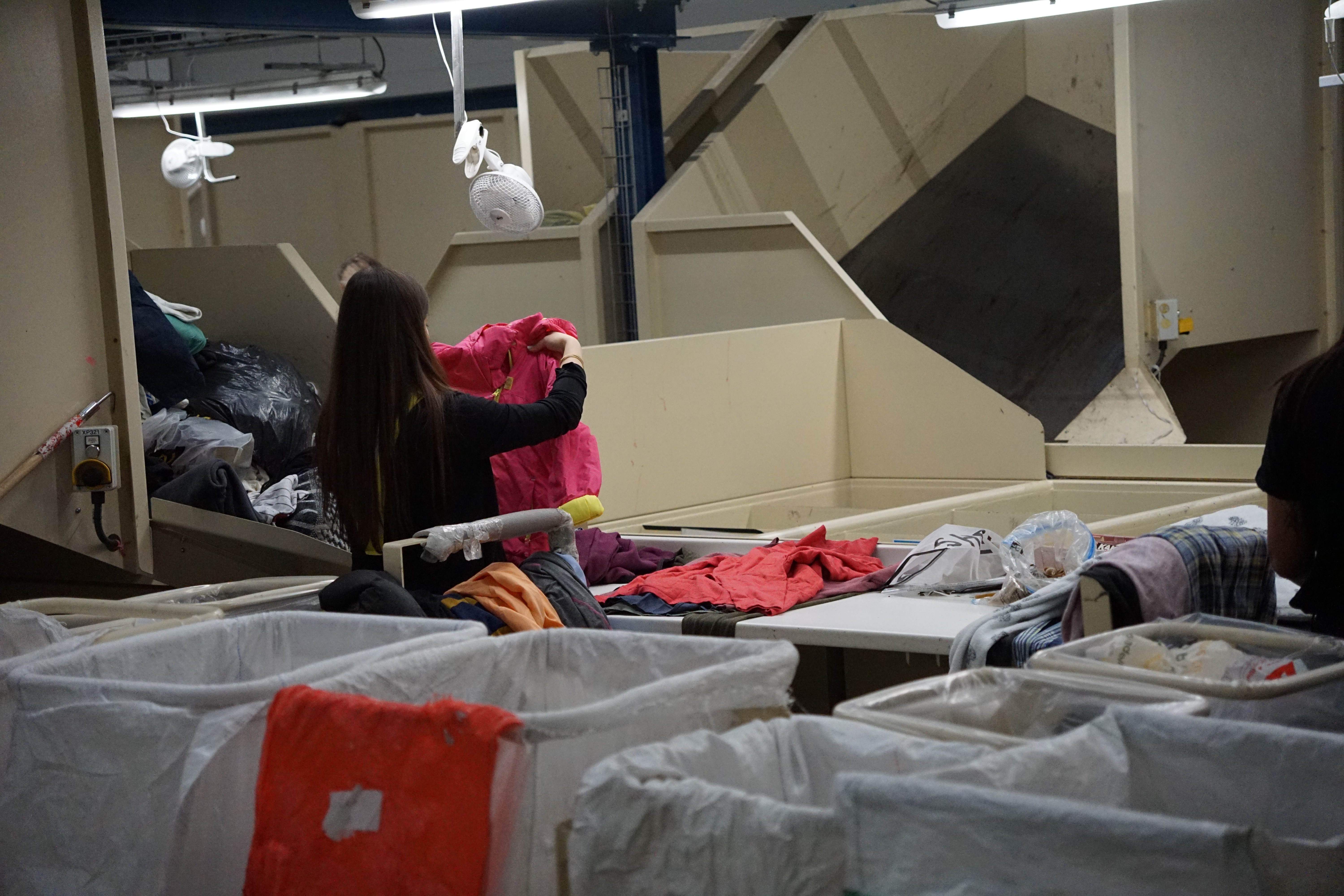
Innovation in sorting and recycling technologies is expected to proliferate as the textiles sector moves towards a more circular economy, said Alan Wheeler, CEO of Textile Recycling Association, one of the project partners. “Today, much of the sorting infrastructure still relies heavily on manual processes, which can be labour-intensive, costly and difficult to scale,” he said. “As the volume of collected textiles increases, more advanced sorting systems will be needed to efficiently separate garments suitable for reuse from materials destined for recycling. This is where new research and innovation initiatives are beginning to play an important role.”
The SORT4CIRC project is a €5m Horizon Europe research programme running from 2026 to 2028, involving 14 partners from across Europe. Its purpose is to tackle challenges in post-consumer textile sorting and recycling. By combining multiple novel technologies, SORT4CIRC aims to develop automated sorting systems that cut costs, improve efficiency, and create high-quality feedstock for reuse and recycling.
“The ambition is not to replace existing reuse systems, but to strengthen them,” said Wheeler. “Improved sorting technology could enable operators to identify reusable garments more efficiently while also producing higher-quality material streams for recycling when reuse is no longer possible.” The project brings together expertise from across the textile value chain to explore how technologies such as AI-driven visual recognition, spectroscopy and digital product passport systems could improve sorting accuracy and traceability. Constructor University in Germany is the lead co-ordinator.
View all
Intelligent Textile SORTing to enable CIRCularity
Developing automated sorting systems for post-consumer textiles that cut costs, improve efficiency, and create high-quality feedstock for reuse and recycling.
About

The mission
As EU Member States introduce mandatory separate textile waste collection, expanding and streamlining sorting and recycling is essential to handle the growing volume of post-consumer textiles.
Objective 1: Smart, automated textile sorting
Combine novel technologies like AI and computer vision into a streamlined process to automate sorting for reuse and recycling.
Objective 2: Increased traceability for textiles
Increase traceability of pre-owned clothes through secure, integrated digital solutions such as tokenised RFID tags and Digital Product Passports.
Objective 3: Readiness for recycling
Surpass the current limits of automated textile sorting and deliver high-quality feedstock that meets the technical and economic requirements of mechanical and chemical textile recycling.
Objective 4. Proven impact and viability
Assess technical, environmental, and economic feasibility of automated textile sorting at scale.
News & Events
SORT4CIRC joins Circular Textile Cluster
NEWS
June 18, 2026
We are proud to announce our participation in the newly formed Circular Textiles Cluster, which includes six projects funded under the EU’s HorizonEurope (HORIZON-CL6) programme. Together, we are joining forces to drive the European textile and clothing industry toward a fully circular and sustainable future.
Apart from SORT4CIRC, the cluster includes the following projects.
STREP: Advancing sustainable chemical recycling and intelligent automation to produce 100% closed-loop recycled yarns exclusively from post-consumer textiles.
AUTOLOOP: Revolutionizing the industry with AI-powered sorting, pollutant-resistant chemical recycling, and a Digital Product Passport (DPP) Data Hub.
Circula-TEX: Guiding the sustainable, harmonized implementation of Extended Producer Responsibility (EPR) schemes across Europe.
TRUSTEX: Analyzing the feasibility of EPR schemes to promote circular business models through eco-design, improved waste management, and digital traceability.
TexMat: Piloting smart, automated collection containers that reward consumers for returning textiles while gathering product history via DPPs.
Stay tuned for future webinars, collaborative newsletters, and innovative industry insights.
SORT4CIRC showcased at Go Circular Summit, Mannheim
NEWS
April 9, 2026
SORT4CIRC was presented publicly for the first time at the inaugural “Textiles Day” of the Go Circular Summit in Mannheim, Germany, marking an important milestone as the project moves into full delivery phase.
The project was introduced during the afternoon session “Data & Next-Generation Recycling Technologies: Enabling Circular Textiles at Scale”, chaired by Alan Wheeler, Chief Executive Officer of the Textile Recycling Association (TRA) and a SORT4CIRC project partner.
The session brought together leading voices on digitalisation and recycling innovation, with Stepan Vashkevich, Circular Textiles Strategist at Circle Economy—also a SORT4CIRC partner—presenting the project to an audience of around 200 professionals from across the European and global textiles value chain.
Stepan’s presentation set out the wider context of textile circularity, drawing on system-level analysis of material flows and market dynamics. It highlighted the structural challenges facing the sector: despite increasing volumes of post-consumer textiles, much of the material is currently downcycled or lost to disposal, while sorting processes remain largely manual, costly and inefficient.
At the same time, forthcoming policy measures—including separate collection obligations, Extended Producer Responsibility (EPR), and Digital Product Passports—are expected to significantly increase volumes and place additional pressure on existing systems.
Against this backdrop, SORT4CIRC was presented as a practical, solutions-driven response. Bringing together 14 partners across Europe, the project is developing automated sorting systems that combine AI, computer vision and spectroscopy, alongside enhanced traceability through technologies such as RFID and Digital Product Passports. The aim is to improve efficiency, reduce costs, and generate high-quality feedstock suitable for both reuse and recycling markets.
A key focus of the project is real-world application, with plans to integrate and demonstrate these technologies within an operational environment, supported by robust technical, environmental and economic assessment to establish a viable business case for scale.
“What SORT4CIRC is doing is bridging the gap between ambition and implementation. By combining advanced sorting technologies with traceability, we are creating the conditions needed to make textile recycling both scalable and economically viable,” said Vashkevich.
Earlier in the day, Alan Wheeler also participated in a panel discussion titled “The Coming Storm – How Regulation is Reshaping Textile Recycling”. The session explored how the EU’s evolving regulatory framework is shaping the future of the sector and provided an opportunity to highlight the role of SORT4CIRC in addressing emerging challenges, as well as to introduce the project ahead of its dedicated presentation later in the programme.
“There is a clear recognition across the sector that regulation alone will not deliver circularity. Projects like SORT4CIRC are essential in developing the practical solutions that will enable the industry to respond at scale,” said Wheeler.
The Go Circular Summit brought together a wide range of stakeholders, including industry leaders, policymakers and technology providers, with SORT4CIRC partners including the Textile Recycling Association and Circle Economy, also supporting the event.
The strong level of engagement in Mannheim underlined the importance of collaborative, technology-led initiatives such as SORT4CIRC in delivering a more efficient and commercially viable circular textiles system.
SORT4CIRC aims to improve sorting with new technologies
Blog
April 9, 2026
This article was first published in the Textiles Loop Magazine
SORT4CIRC is a new multi-partner project with EU funding which focuses on the challenges of textile sorting as part of recycling operations.
Innovation in sorting and recycling technologies is expected to proliferate as the textiles sector moves towards a more circular economy, said Alan Wheeler, CEO of Textile Recycling Association, one of the project partners. “Today, much of the sorting infrastructure still relies heavily on manual processes, which can be labour-intensive, costly and difficult to scale,” he said. “As the volume of collected textiles increases, more advanced sorting systems will be needed to efficiently separate garments suitable for reuse from materials destined for recycling. This is where new research and innovation initiatives are beginning to play an important role.”
The SORT4CIRC project is a €5m Horizon Europe research programme running from 2026 to 2028, involving 14 partners from across Europe. Its purpose is to tackle challenges in post-consumer textile sorting and recycling. By combining multiple novel technologies, SORT4CIRC aims to develop automated sorting systems that cut costs, improve efficiency, and create high-quality feedstock for reuse and recycling.
“The ambition is not to replace existing reuse systems, but to strengthen them,” said Wheeler. “Improved sorting technology could enable operators to identify reusable garments more efficiently while also producing higher-quality material streams for recycling when reuse is no longer possible.” The project brings together expertise from across the textile value chain to explore how technologies such as AI-driven visual recognition, spectroscopy and digital product passport systems could improve sorting accuracy and traceability. Constructor University in Germany is the lead co-ordinator.
View all
Intelligent Textile SORTing to enable CIRCularity
Developing automated sorting systems for post-consumer textiles that cut costs, improve efficiency, and create high-quality feedstock for reuse and recycling.

The mission
As EU Member States introduce mandatory separate textile waste collection, expanding and streamlining sorting and recycling is essential to handle the growing volume of post-consumer textiles.
Objective 1: Smart, automated textile sorting
Combine novel technologies like AI and computer vision into a streamlined process to automate sorting for reuse and recycling.
Objective 2: Increased traceability for textiles
Increase traceability of pre-owned clothes through secure, integrated digital solutions such as tokenised RFID tags and Digital Product Passports.
Objective 3: Readiness for recycling
Surpass the current limits of automated textile sorting and deliver high-quality feedstock that meets the technical and economic requirements of mechanical and chemical textile recycling.
Objective 4. Proven impact and viability
Assess technical, environmental, and economic feasibility of automated textile sorting at scale.
News & Events
SORT4CIRC joins Circular Textile Cluster
NEWS
June 18, 2026
We are proud to announce our participation in the newly formed Circular Textiles Cluster, which includes six projects funded under the EU’s HorizonEurope (HORIZON-CL6) programme. Together, we are joining forces to drive the European textile and clothing industry toward a fully circular and sustainable future.
Apart from SORT4CIRC, the cluster includes the following projects.
STREP: Advancing sustainable chemical recycling and intelligent automation to produce 100% closed-loop recycled yarns exclusively from post-consumer textiles.
AUTOLOOP: Revolutionizing the industry with AI-powered sorting, pollutant-resistant chemical recycling, and a Digital Product Passport (DPP) Data Hub.
Circula-TEX: Guiding the sustainable, harmonized implementation of Extended Producer Responsibility (EPR) schemes across Europe.
TRUSTEX: Analyzing the feasibility of EPR schemes to promote circular business models through eco-design, improved waste management, and digital traceability.
TexMat: Piloting smart, automated collection containers that reward consumers for returning textiles while gathering product history via DPPs.
Stay tuned for future webinars, collaborative newsletters, and innovative industry insights.
SORT4CIRC showcased at Go Circular Summit, Mannheim
NEWS
April 9, 2026
SORT4CIRC was presented publicly for the first time at the inaugural “Textiles Day” of the Go Circular Summit in Mannheim, Germany, marking an important milestone as the project moves into full delivery phase.
The project was introduced during the afternoon session “Data & Next-Generation Recycling Technologies: Enabling Circular Textiles at Scale”, chaired by Alan Wheeler, Chief Executive Officer of the Textile Recycling Association (TRA) and a SORT4CIRC project partner.
The session brought together leading voices on digitalisation and recycling innovation, with Stepan Vashkevich, Circular Textiles Strategist at Circle Economy—also a SORT4CIRC partner—presenting the project to an audience of around 200 professionals from across the European and global textiles value chain.
Stepan’s presentation set out the wider context of textile circularity, drawing on system-level analysis of material flows and market dynamics. It highlighted the structural challenges facing the sector: despite increasing volumes of post-consumer textiles, much of the material is currently downcycled or lost to disposal, while sorting processes remain largely manual, costly and inefficient.
At the same time, forthcoming policy measures—including separate collection obligations, Extended Producer Responsibility (EPR), and Digital Product Passports—are expected to significantly increase volumes and place additional pressure on existing systems.
Against this backdrop, SORT4CIRC was presented as a practical, solutions-driven response. Bringing together 14 partners across Europe, the project is developing automated sorting systems that combine AI, computer vision and spectroscopy, alongside enhanced traceability through technologies such as RFID and Digital Product Passports. The aim is to improve efficiency, reduce costs, and generate high-quality feedstock suitable for both reuse and recycling markets.
A key focus of the project is real-world application, with plans to integrate and demonstrate these technologies within an operational environment, supported by robust technical, environmental and economic assessment to establish a viable business case for scale.
“What SORT4CIRC is doing is bridging the gap between ambition and implementation. By combining advanced sorting technologies with traceability, we are creating the conditions needed to make textile recycling both scalable and economically viable,” said Vashkevich.
Earlier in the day, Alan Wheeler also participated in a panel discussion titled “The Coming Storm – How Regulation is Reshaping Textile Recycling”. The session explored how the EU’s evolving regulatory framework is shaping the future of the sector and provided an opportunity to highlight the role of SORT4CIRC in addressing emerging challenges, as well as to introduce the project ahead of its dedicated presentation later in the programme.
“There is a clear recognition across the sector that regulation alone will not deliver circularity. Projects like SORT4CIRC are essential in developing the practical solutions that will enable the industry to respond at scale,” said Wheeler.
The Go Circular Summit brought together a wide range of stakeholders, including industry leaders, policymakers and technology providers, with SORT4CIRC partners including the Textile Recycling Association and Circle Economy, also supporting the event.
The strong level of engagement in Mannheim underlined the importance of collaborative, technology-led initiatives such as SORT4CIRC in delivering a more efficient and commercially viable circular textiles system.
SORT4CIRC aims to improve sorting with new technologies
Blog
April 9, 2026
This article was first published in the Textiles Loop Magazine
SORT4CIRC is a new multi-partner project with EU funding which focuses on the challenges of textile sorting as part of recycling operations.
Innovation in sorting and recycling technologies is expected to proliferate as the textiles sector moves towards a more circular economy, said Alan Wheeler, CEO of Textile Recycling Association, one of the project partners. “Today, much of the sorting infrastructure still relies heavily on manual processes, which can be labour-intensive, costly and difficult to scale,” he said. “As the volume of collected textiles increases, more advanced sorting systems will be needed to efficiently separate garments suitable for reuse from materials destined for recycling. This is where new research and innovation initiatives are beginning to play an important role.”
The SORT4CIRC project is a €5m Horizon Europe research programme running from 2026 to 2028, involving 14 partners from across Europe. Its purpose is to tackle challenges in post-consumer textile sorting and recycling. By combining multiple novel technologies, SORT4CIRC aims to develop automated sorting systems that cut costs, improve efficiency, and create high-quality feedstock for reuse and recycling.
“The ambition is not to replace existing reuse systems, but to strengthen them,” said Wheeler. “Improved sorting technology could enable operators to identify reusable garments more efficiently while also producing higher-quality material streams for recycling when reuse is no longer possible.” The project brings together expertise from across the textile value chain to explore how technologies such as AI-driven visual recognition, spectroscopy and digital product passport systems could improve sorting accuracy and traceability. Constructor University in Germany is the lead co-ordinator.
View all